Global demand for laminated automotive glass
The market for laminated automotive glass is growing fast. Therefore, more cars use safety and acoustic glazing on windshields, roofs and sidelites. IOCCO supports this change with complete, practical solutions. In short, we cover single machines and turnkey lines. For background, see what laminated glass is and the interlayer PVB.
What is laminated automotive glass and why it matters
Laminated automotive glass has two plies and a thin polymer film (e.g., PVB). As a result, it improves safety and comfort. It also filters UV. Besides, it supports HUD and ADAS zones. Compared with monolithic glass, it keeps stable visual quality. Thus, parts can be integrated with accuracy. Learn more about automotive glass.
IOCCO solutions for laminated automotive glass
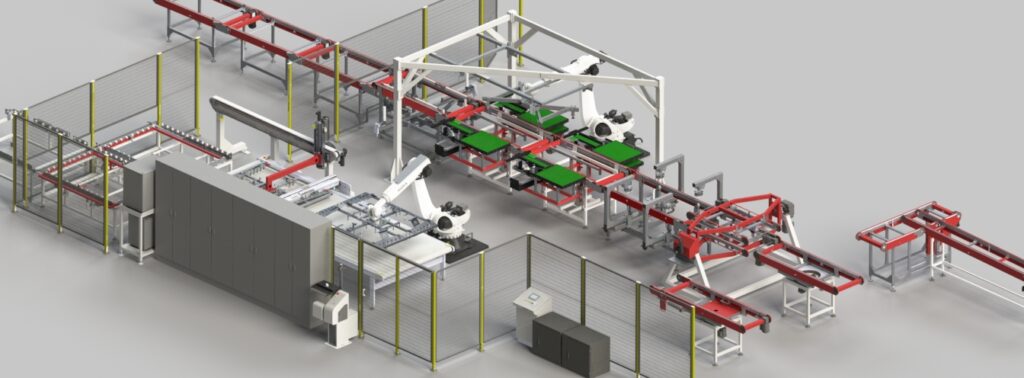
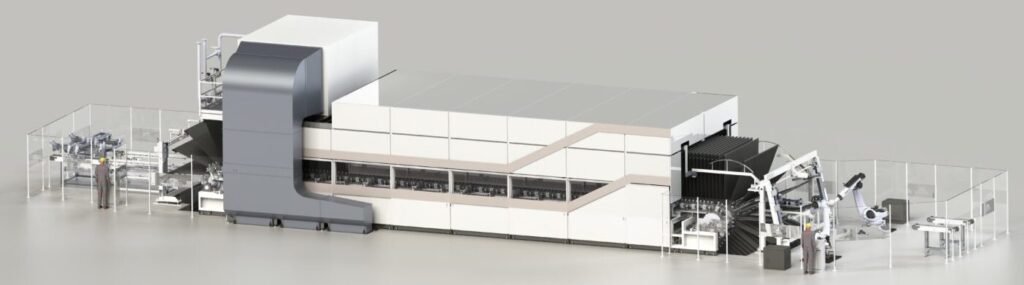
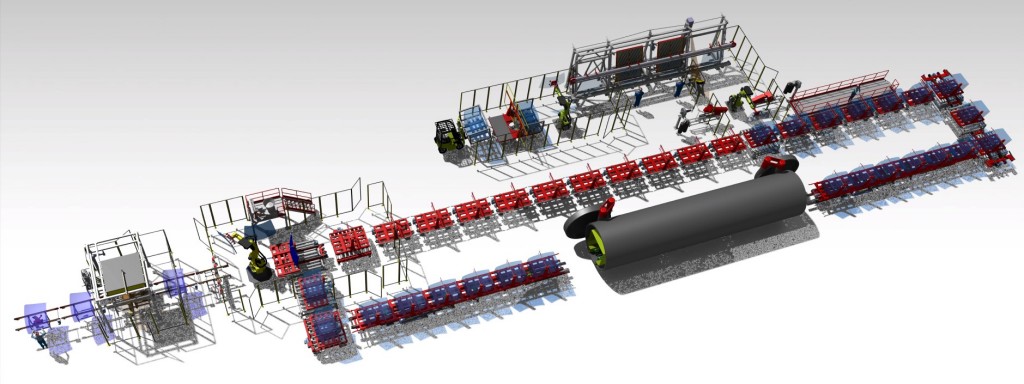
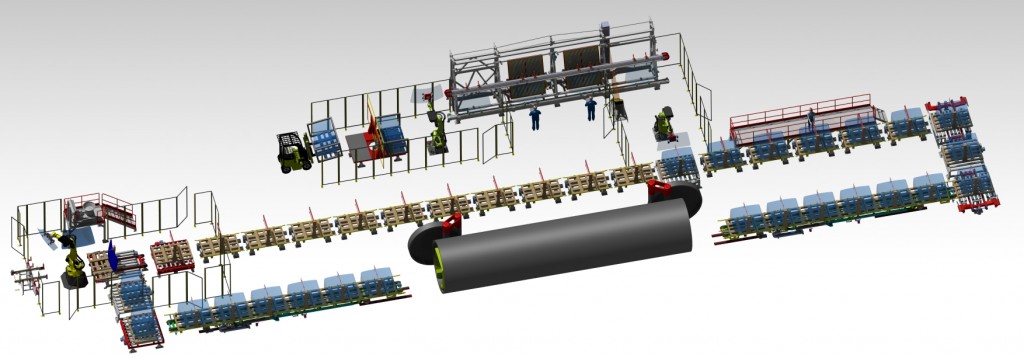
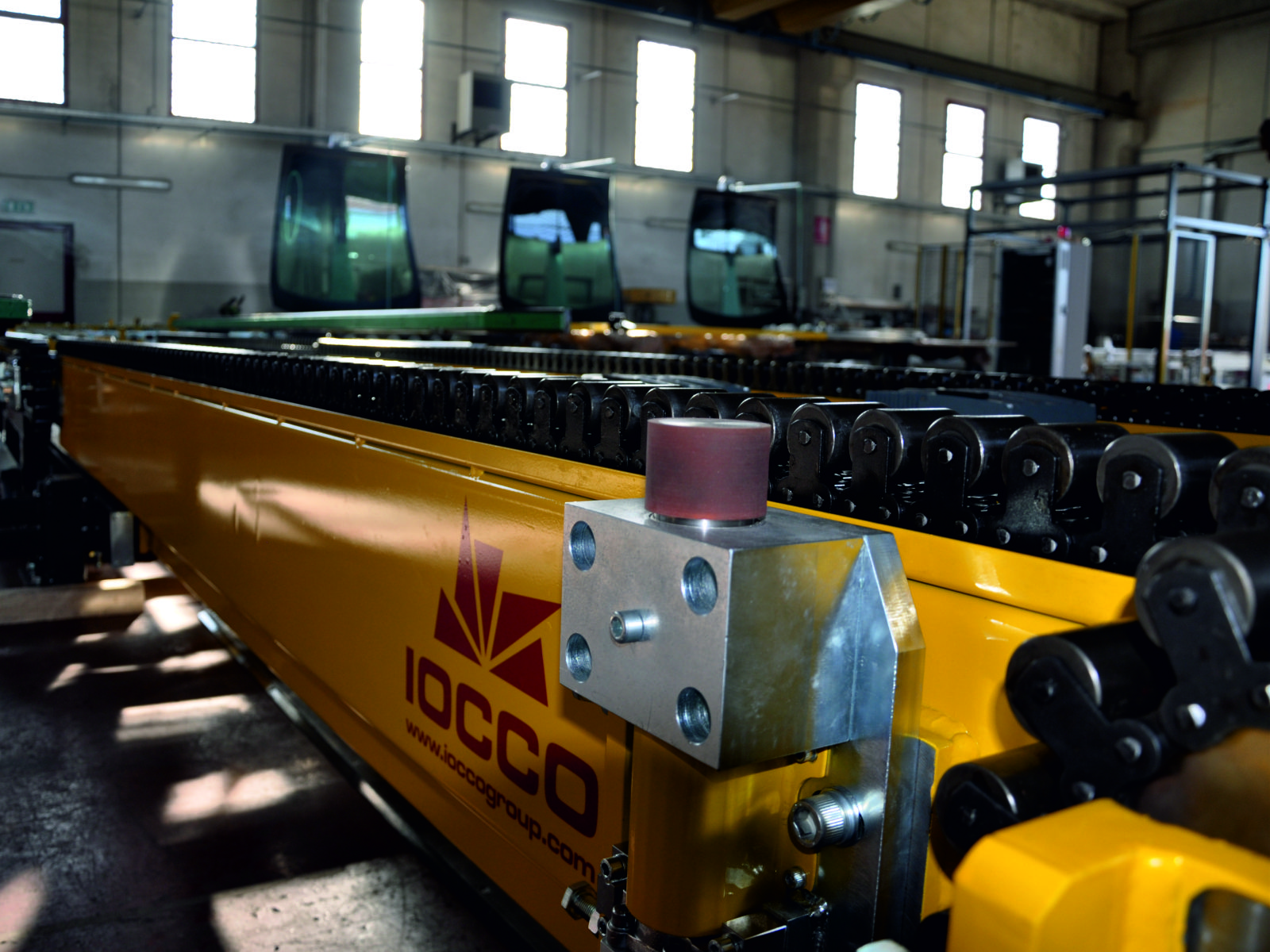
IOCCO builds stand-alone machines and complete lines. For example, we supply assembly, de-airing (bag or ring furnace), inline component application, autoclave & de-airing, PVB trimming and final checks. Moreover, each layout adapts to space, mix and takt time. Therefore, scale-up is simple.
Pre-process line for laminated automotive glass
The pre-process has seven steps: loading, handling, cutting, breaking, grinding, washing and printing. First, IOCCO links the machines to keep a steady flow. Next, buffer storage protects continuity toward bending or tempering. Therefore, defects fall. As a result, rework drops.
Continuous flow. Better uptime. Fewer defects.
Bending furnaces: loading and unloading
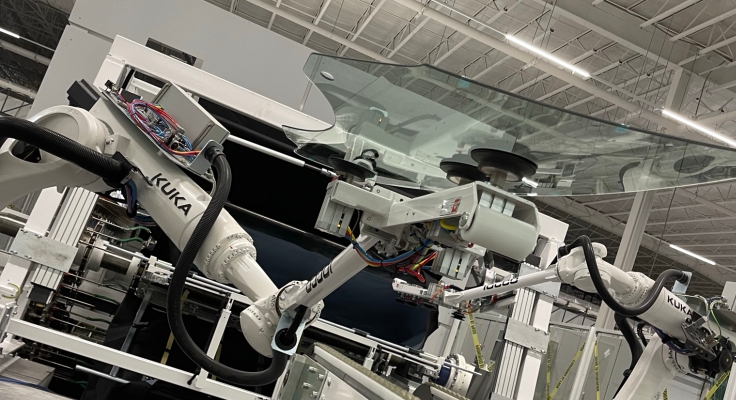
After pre-process, glass pairs load from racks or conveyors. The choice depends on the furnace and the recipe. Then robots with vision pick the inner/outer pair and place it on shaped carriers. Each carrier is tracked. Therefore, the flow stays under control.
In advanced lines, pairing comes first. For example, mechanical references and vision raise accuracy. Next, robots unload from the cooling zone and send parts to washing. Finally, assembly and pre-lamination start.
Unloading with vision support.
Press bending
For press-bending, one lite loads from racks or in-line. Next, dedicated tools set the position. Then unloading starts from the cooling zone and moves parts to washing. Thus, the flow continues toward assembly.
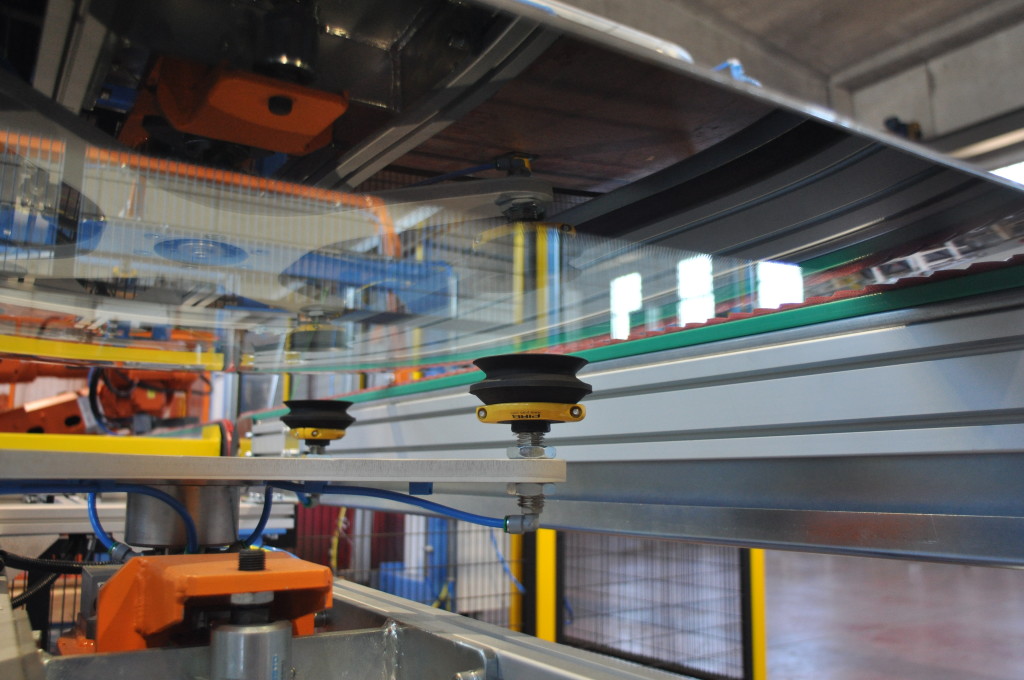
Accurate pairing and loading.
Assembly and lay-up
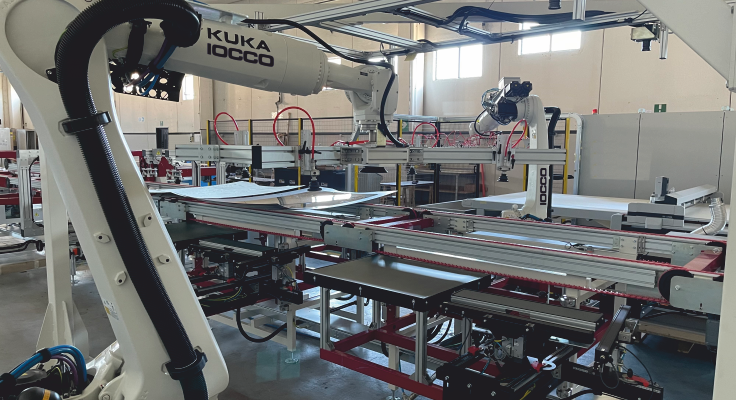
In assembly, the two plies and the PVB align and laminate. IOCCO offers manual, semi-automatic and automatic stations. These include lay-up and pre-pressing. Also, components such as mirror boss, sensors, brackets and antennas can be applied inline. Therefore, quality improves. Meanwhile, repeatability rises.

line to assembly automotive windshield and sunroof
Fully automated assembly line.
Consistent lay-up. Clean handling.
De-airing furnaces
Air removal happens in a Vacuum Bag Furnace or a Vacuum Ring Furnace. The choice depends on shape, mix and cost goals. IOCCO supports both and tunes recipes for windshields, roofs and sidelites. Therefore, clarity stays high.
Capacity and repeatability by design.
Autoclave handling and PVB trimming
After de-airing, autoclave cycles complete adhesion and clarity. Automatic loading and unloading keep a continuous feed. Then PVB trimming and final washing prepare parts for checks. Consequently, edge defects fall.
Throughput and safety improved.
Final inspection and traceability
The final line checks visual quality and geometry. Specifically, vision and scanners find seeds, bubbles, streaks and edge issues. They also verify black print, PVB alignment, ADAS/HUD zones and curvature. Finally, good parts are traced in the MES. For regulatory context, see UNECE R43.
Stable quality at end of line.
Use cases and benefits
Laminated automotive glass fits many parts. For example, windshields benefit from acoustic comfort and safety. Roofs gain solar control and privacy. Sidelites add protection from impacts. In each case, the process matters. Good handling, clean rooms and tuned recipes keep quality high. Therefore, warranty claims fall. Meanwhile, driver comfort rises.
There are business gains too. First, automated pairing and loading cut cycle time. Next, de-airing recipes reduce rework. Then, autoclave flow keeps takt stable. Finally, vision at end-of-line captures defects early. As a result, yield improves. Besides, operators work in safer, more ergonomic areas.
Common defects and how we reduce them
Typical issues include bubbles, streaks, seeds and edge marks. Sometimes, there is print misalignment or warp. IOCCO addresses these risks in several ways. First, we stabilize handling and keep surfaces clean. Then, we control temperature and pressure during de-airing. Also, we align parts with mechanical references and vision. Therefore, distortion and misplacement drop. In addition, SPC and KPIs show trends, so teams can adjust fast.
Quick glossary
- PVB: polymer film between glass plies. It absorbs energy and noise.
- De-airing: step that removes air from the stack before autoclave.
- HUD/ADAS zones: areas on the glass for displays and sensors.
- SPC/KPIs: statistics used to keep the process stable over time.
Why choose IOCCO for laminated automotive glass
- Competence: a multidisciplinary team with proven references.
- Quality: FAT/SAT, recipe control and SPC/KPIs.
- Reliability: robust machines, safe handling and buffering.
- Customization: modular layouts fit space, mix and targets.
- Digital integration: MES/ERP links, RFID/barcodes, logs and remote service.
- Efficiency & ergonomics: tuned thermal recipes, energy-saving modes and operator-centric HMIs.
Conclusion
IOCCO supports manufacturers of laminated automotive glass worldwide. We integrate robotics, machine vision, PLC and AI. Therefore, you get steady quality and output, from single machines to complete lines. Finally, our teams help you improve and scale.

IOCCO Automotive Catalog (PDF)
Overview of equipment, process blocks and full lines. Also, layouts and options are included.